Sunday, September 4, 2011

The Gospel of Judas


I came back to this Simon Mawer novel now because I liked The Glass Room so much and because it seemed like a good segue from The Essene Conspiracy. Aside from the quantum leap in quality of the writing, this is a completely different kind of book. While it has a papyrus from a Qmran type source that offers a radically different version of Christ's life and the founding of the church, like Wachtel's book, like Da Vinci Code and its numerous imitators, this is not a thriller.

It is a novel about a priest's loss of faith, a complex drama in which the discovery of a putative "Gospel of Judas" plays a decidedly minor role and only really in the last third of the book. The story of Father Leo Newman, a British papyrologist who lives in Rome, has as much in common with Bernanos' Diary of a Country Priest and J.F. Powers' Morte d'Urban as it does with the garden variety biblical thriller.

Mawer in fact has such an understanding of the celibate's mind, the emotional stunting that accompanies the vow of chastity, the fragile foundation in faith for this type of dedication, that I checked his biography to see if he actually was in the seminary. If he was, his bio gives no indication of it, so perhaps he has simply gotten to know a number of priests well in his 30 years of living in Rome. In any case, I know from my own experience as a Jesuit novice and seminarian that he describes those feelings with agonizing accuracy.

Less surprising is how Mawer can make Rome palpable with a few deft strokes. These are not elaborate descriptions but telling details that betray an intimacy with the sights, sounds and smells of the Eternal City. I've only spent a smattering of weeks in Rome, but the city came rushing back into my memory in Mawer's narrative.

There is more to say about the plot but it is again the language that for me is in the forefront. It is a muscular prose, as vivid in its description of the tangible as the intangible. It is a sophisticated, sinuous narrative that has room for Latin, Italian, Greek, German seamlessly embedded in the text. In my research about the author, I came across this statement from an interview he gave:

"To write decent novels you have to be in love with the language. You have to feel the texture of it between your fingers, mould it like clay, carve it like marble. Despite all the creative writing programs in the world, I am sure this ability cannot be taught. So I try to use the meanings of words, of place names, of personal names, to inform the narrative."

This is exactly what comes across. In this book, just for instance, Mawer uses the redolent names of Rome's churches to convey the grandeur, the historicity, the plasticity, even, of these monuments -- Santa Maria Maggiore, San Crisogono, Santa Maria dell'Anima, San Lorenzo fuori le mura. His descriptions of the picnics and outings that his mother, the wife of the German ambassador to Italy, made in wartime Rome evoke the splendid ruin of Italy's past. Such pursuit of civilized leisure even as the Axis war machine rains terror on the rest of Europe is reminiscent of Visconti's "The Damned."

Mawer the writer does not seem to have much use for fidelity in marriage. Perhaps there's too little drama in that and it's only the adulterous affair that merits a novel. Leo's mother, the wife of the German ambassador, and Leo's lover, the wife of the British ambassador (no subalterns here) conduct curiously parallel affairs in Rome. Their husbands are similarly cold and detached, the implication being that this is the type of personality that becomes a successful diplomat. The women characters are so much more vibrant, despite their frailty or instability or moral flaws.

Judas Iscariot, the apostle, is the author of the gospel that Leo comes to believe is genuine. But the novel is full of other Judases. Leo's mother betrays her lover in a way that can know no forgiveness (except from the betrayed), and Leo himself earns the title of Judas for turning his back on his priesthood and the 2,000-year history of Christianity.

The details of the gospel are interesting, how it transforms the narrative of Jesus' life simply by shifting a couple of small facts. Whether genuine or forgery, whether a truthful account or deliberate misinformation, the gospel of Judas has little chance of challenging the centuries-old Christian faith. History has too much invested in the received tradition to accept any other truth, even if factual. Yes, the gospel has information that could shake Christianity to its foundations, but it can never earn the credence that would allow this to happen.

Just where the author stands in all this become clear in his account of Leo's "pilgrimage" at the end of the book, which explains why the church will remain triumphant and why it's futile to seek the truth.

Faith has no object to begin with, so it cannot be exposed. As Leo's lover Madeleine tells him when he finally accepts the inevitable about their relationship: "Poor poor Leo, learning at last the only lesson life has to give." "What's that?" [Leo asks]. "That there is nothing else. that there is only you and me, now, at this moment and this place. All else is no more than empty hope."

Just a few pages later, when Madeleine asks Leo if he still believes after the discovery of the gospel, Leo tries to say that belief doesn't just "evaporate."

Madeleine responds: "Doesn't it? That's exactly what it seems to do in my experience. Evaporate, like a lake or something drying up, leaving nothing behind but mudflats and a few dirty puddles and a musty smell of superstition."

Mawer clearly doesn't set out to write bestsellers. This is anything but a potboiler, though it is a compelling read and has its own suspense. Nor will his willingness to mock Christianity and make an apostate priest his hero endear him to legions of believers. But the reader doesn't have to identify with Leo. The reader can see him as a flawed, in some ways tragic individual. The Gospel of Judas is a question, not an answer, and the reader can decide where the truth lies.

Tuesday, August 30, 2011

The Essene Conspiracy


This thriller by S. Eric Wachtel is part of my new effort to read self-published e-books as I prepare to self-publish my own book. I read and recently reviewed Jim Bruno's excellent Tribe.

I'll confess I spotted this book, evidently a print on demand copy in the thriller section of Politics & Prose and simply did not want to take a chance spending $14.99 on an author I knew nothing about. Even so, the $9.99 price tag on the Kindle version was relatively high.

The novel starts with a lot of promise -- the mysterious murder of the Israeli finance minister, a sympathetic American "security consultant," and a plot that eventually involves the Essenes (as in Dead Sea Scrolls), the Ark of the Covenant (as in Raiders of the Lost Ark), and that chapel in Rosslyn, Scotland (as in Da Vinci Code).

Unfortunately, the book failed to fulfill its early promise and broke down seriously as it moved to a climax that lacked any action or suspense. The author spends a page in the final chapters showing us a statue in the Justice Department and then tells us about a firefight to wrap up the conspiracy in two sentences.

Author Wachtel evidently worked in finance and the money-laundering scheme that launched the plot is well told. Likewise, the scenes in Jerusalem and Tel Aviv, the descriptions of Israeli officialdom show glimmerings of real potential. But the putative hero, Harry McClure fades into the background as the plot progresses and spends virtually all of his time showing off his cigars, his office, his single malt Scotch, his country house (we get it, we get it -- he's rich and knows how to live well, whoopee). The most active he gets is clipping off the end of cigar and pouring a drink. Wachtel's author bio says he's working on another Harry McClure plot, so I hope he figures out how to get a little action into the narrative.

The principal villains also show considerable promise at the beginning. Mayer Rubin becomes a Hasidic Jew, spends time in Israel, and is infected with the idealism of the Essene conspiracy, which aims to rid Temple Mount of its Muslim sacred buildings, rebuild Herod's Temple and restore the Ark of the Covenant to it, establishing a theocracy in Israel. The author develops a lengthy back story for Rubin, but then, as he does with McClure, just drops him and shifts to a new set of characters that are never fleshed out.

This book would have benefited enormously from a good editor. Wachtel is evidently not a practiced writer, but equally evidently he has some talent for it. He simply failed to follow through, lapsed into telling instead of showing, got way to caught up in details (people are always saying goodbye when they don't need to), and numerous other mistakes of a first-time and untutored writer.

So we see that the limits of self-publishing are quickly reached. This could have been, if not a good book, at least a much better book with some help. Wachtel will have an opportunity in subsequent efforts to improve and presumably will.

In any case, I'm a sucker for thrillers that involve Essenes, early Christianity, Templars and all those esoteric things that by now constitute a real sub-genre. So even with its flaws, I enjoyed reading this.

Amazon reviews

Until now, I've only occasionally cross-posted my book reviews on Amazon -- when someone asked me to or it was a book by a friend that I wanted to support. But I'm realizing there's no reason not to systematically post the reviews there -- except of course those that are published in Washington Independent Review of Books.

So I will no longer note that reviews are cross-posted on Amazon; it will be more or less automatic. Also, Amazon has made it very easy to then automatically post the review on Facebook, though of course that drives traffic to Amazon and not to my blog.

Sunday, August 28, 2011

Tribe


Cross-posted on Amazon

James Bruno’s riveting tale of skulduggery in the CIA and Central Asia is a page-turner par excellence. Or, if you’re downloading the latest e-book from this Kindle bestselling author, a page-scroller sans pareil.

Bruno shifts the rollercoaster action of his latest spy thriller effortlessly from the Khyber Pass to the Old Executive Office Building to the “Wild East” of Yemen and the reader just needs to hold on for dear life.

Tribe’s story of a conspiracy to have the U.S. government hand back control of Afghanistan to the Taliban in exchange for American oil companies getting to divvy up the riches of the Caspian Sea is Realpolitik at its most real. Bruno, author of Permanent Interests and Chasm, brings his trademark insider’s knowledge of government intelligence agencies together with a narrative skill that rivals anything David Ignatius has written, and does him one better in conveying the curious blend of bravura and bureaucracy that characterizes the CIA.

Bruno adds his own mordant wit and deeply professional cynicism to the mix to create a potboiler that has everything – action, suspense, sex, humor, and, in an American take on John Le Carré’s gray world of espionage, a meditation on the bigger issues of trust and betrayal and how to find room for patriotism or integrity in a world of runaway egos and ambition.

The hero of Tribe is Harry Brennan, who in attitude and magnetism could be portrayed on the screen by Clint Eastwood in his prime (the author even toys with the reader and mentions Eastwood in describing his character). This Harry is dirty as well, as he is not always successful in resisting the seductions – of power, sex, and revenge – that are thrown his way. He acknowledges his failings, but does not lose sight of which side he wants to come down on.

While Tribe begins with an attack on an al-Qaeda camp in Afghanistan and climaxes with a thrilling hostage rescue in Yemen, most of the action in between takes place in the tony townhouses of Georgetown or the equestrian estates of Virginia where Washington’s movers and shakers ply their trade. It is tempting at some points to figure out if Bruno has mounted an elaborate roman a clef, but in the end it isn’t necessary because the author’s vivid characters stand on their own.

The action in exotic locales like Central Asia and the Arabian Peninsula has an eyewitness feel to it. But it is ultimately the layers of intrigue within the U.S. government – and the Establishment that governs behind the façade of our democratic institutions – that packs the real punch in this novel. Bruno skillfully and authoritatively peels back the cant and hypocrisy of the ruling class, and mercilessly exposes the greed and venality that motivates so much of what happens in Washington.

Tribe, we realize as this thriller reaches its climax and denouement, is about loyalty, and that is not a quality confined to Afghani or Yemeni clans that Harry Brennan gets involved with. It refers as well to the primordial ties of family and friendship, of camaraderie and shared values that manage to survive the ravages of our putative civilization. Harry, in the end, is faithful to his tribe.

Bruno is in the vanguard of those talented authors who are exploiting the rapidly expanding digital medium for books. He has found his audience in the burgeoning e-book market and gained a loyal following. Because he can deliver the goods in authenticity and a lucid prose style, Bruno is proof that the post-publishing house world can produce suspense novels on a par with the franchise names on the print bestseller lists.

Friday, August 26, 2011

Locavesting


Cross-posted on Amazon

Amy Cortese's fabulous tale of a new investing trend is one of those transformative books that changes the way you look at things, and gives you reason to hope amid gridlock in Washington and a sluggish economic recovery.

Just as "locavores" promote locally grown food, locavestors put their money to work in their communities. It is a phenomenon Cortese has covered as a journalist for the past several years. She coined the term "locavesting" to describe it in a 2008 piece she wrote for the New York Times Magazine.

What she has latched on to is a subterranean movement that has yet to break through into the national consciousness. But it is no less real for that.

Cortese describes the creative ways that people around the country are finding to invest in local businesses, from mom-and-pop shops on Main Street to sprawling cooperatives like Organic Valley, a major dairy producer.

She chronicles all of this in a lean, journalistic prose that lets the story speak for itself. She has obviously gone to these places, talked to these people and seen locavesting in action. Her book is alive with real people doing sensible, hopeful things - such a contrast to the cant and posturing that fills so much of the mainstream media reporting about the economy. Her book is a breath of fresh air and a promise of hope for a resilient economy.

Locavesting is in part a reaction to the outrage over the practices of Wall Street and the big banks that brought on the financial crisis. At the same time, communities have been devastated by the recession and foreclosure crisis and people don't want to stand by helplessly.

So they began looking for alternatives, especially for ways to keep their money in the community and put it to work there.

Cortese tells the story of a bakery in Clare, Mich., that was going to close. Members of the local police force - alarmed at the loss of their doughnuts - bought the bakery and have turned it around to the point that what is now called Cops & Doughnuts has expanded and employs more people than the police department.

The author recounts how an investment "club" in Port Townsend, Wash. began a series of investments to rejuvenate the local economy with a success that has made them a model for other communities.

In addition to the new term she coined for locavesting, Cortese employs a number of neologisms that have gained currency, from "crowdfunding" - using the Internet to collect small sums of money from a large number of people - to "foodshed" - the food equivalent of the local watershed.

One of the key terms in describing locavesting is "social return" - the recognition that an investment may have some intangible returns along with financial gain. People are looking for profit, but another part of the motivation is the wider social benefit that it brings.

Some local investments, however, can also yield significant financial rewards. Just ask the customers of a small ice cream maker in Vermont who bought cheap shares to help the company expand and cashed in when Ben & Jerry's became a household name. Investors in the virtually risk-free nonvoting preferred shares of the agricultural cooperative CHS Inc. earn an 8 percent annual dividend - practically unheard of in this low-interest environment.

Locavestors face numerous obstacles from securities regulations accumulated over decades to protect investors from fraud, stock market collapse and trading abuses. While all these regulations were well-intentioned when they were adopted, they often leave small and medium-sized companies with limited access to financing after consolidation has decimated the number of local banks.

Locavestors make use of existing exemptions like investment clubs or cooperatives that enable them to pool money without expensive and burdensome securities registration. Some companies have revived the practice of direct public offerings - selling their shares directly to customers or suppliers rather than paying a Wall Street firm a big percentage to make an initial public offering. And there's even a movement to get back to local stock exchanges to support trading in the shares of local companies.

Wednesday, August 24, 2011

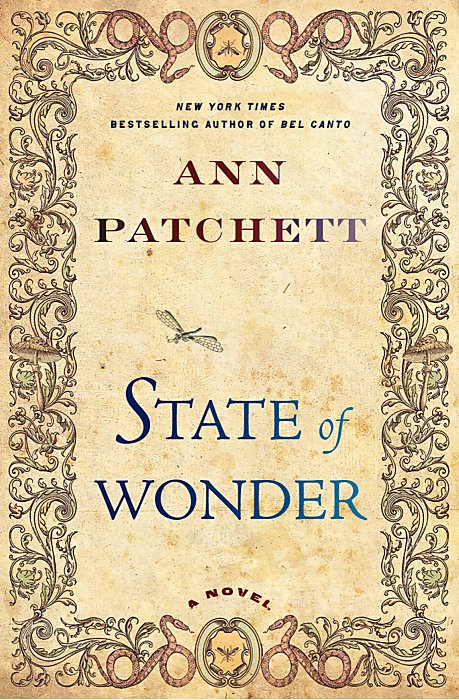
State of Wonder


This captivating novel by Ann Patchett defies categorization. She has passages as humorous as anything Jess Walter or T. Coraghessan Boyle have written, while her story of scientists finding wondrous drugs in the Amazon borders on science fiction.

It is first and foremost her writing that compels the reader. The narrative is consistently fresh, the descriptions novel and flashes of insight make her prose sparkling.

When the news of a colleague's death in the Amazon comes to Marina Singh via a short message in a blue Aerogram (they still exist!), she's amazed that Annick Swenson, the eccentric researcher who sent it, finds so little to say about a man who left behind a wife and three small boys. "For all that loss Dr. Swenson had managed to use just over half the sheet of paper, and in the half a sheet she used she had twice thought to mention the weather. The rest of it simply sat there, a great blue sea of emptiness. How much could have been said in those remaining inches, how much explained, was beyond scientific measure."

Marina makes the trip from wintry Minnesota to tropical Manaus and from there into the Amazonian rain forest to fill in that blank half page, and the reader follows her from the mundane and familiar to the exotic to the fantastical as she finally reaches the Lakashi tribe where women are able to have babies into their 70s. Marina's company, Vogel Pharmaceutical, is trying to find out how so they can patent it and sell it. That's what Dr. Swenson is researching and why Marina's lost colleague, Anders Eckman, is sent to find out what progress is being made.

Patchett peels back the layers of Marina's past, creating a complex and sympathetic character who is, one feels much of the time, unaccountably passive, a person bounced around by the things that happen to her rather than ever in any sense in control of them. In the end, you get the glimmering of an impression that there are certain values which steer her in one direction or another, that she is acquiescing in principle to the things that happen to her. She seems to me to be a weak character, thrown into the shadows when anyone else is with her -- the quirky, driven Dr. Swenson; the "bohemian" Bovenders; the ambivalent boss, Mr. Fox; Eckman's wife, Karen; Eckman himself in flashbacks; Milton, the driver and fixer in Manaus; even Easter, the deaf-mute boy from a neighboring tribe.

Are there other messages here -- about the role of women in society, about pharmaceutical research, about integrity? Yes, but they are quietly woven into the narrative and not hammered into the reader. And there is the vivid, humorous description of northern Brazil -- its heat, its insects, its wildlife.

Patchett toys with the reader when the Bovenders mention they have Werner Herzog's film Fitzcarraldo to watch and then go to the opera house that inspired the Klaus Kinski character to build a theater in the jungle.

Patchett closes the dramatic circle without tying everything up in a neat bundle. It's not the type of book for a sequel but the reader can imagine a continuation of the story. We suspect that Marina has changed in a profound way but we don't follow her way in the world any further. She will presumably be less passive.

I never read Bel Canto but I'm a Patchett fan now and will go back to it.

Saturday, August 6, 2011

Ripley Under Ground

Patricia Highsmith's cynical view of the world emerges in her psychopath character Tom Ripley, who is quintessentially corrupt. This plot springs from Ripley's plot to forge paintings of an artist who committed suicide several years ago, so that he and his pals at a London gallery can not only sell the new paintings but make a small business branding artifacts with the artist's name.

Until an American collector suspects the forgery because Bernard, the painter faking the paintings, used a purple color that Derwatt, the dead painter, abandoned years earlier. The collector was convinced no artist went back to a color he had abandoned.

It is not a spoiler for those who know Ripley to intimate that this collector met a bad end, in a particularly French way. The suspense of these books is to figure out when or if Ripley will do the deed and the additional frisson is to empathize with his ambivalence about it.

The rest of the book then is devoted to the police investigation of the collector's disappearance and whether Bernard, who is cracking, will become Ripley's next victim. Ripley keeps one step ahead of everyone as the widow of the victim, Bernard and Scotland Yard close the ring around him. But suspicion is no proof and without a body or any forensic link between Ripley and the victim (victims?), it remains only a suspicion, at least for a while.

I finished the book as we arrived in France and the largely French setting, with side trips to London and Salzburg, was apt. The stories are apparently set in the 1950s, when things like international phone calls were more primitive than in 1970, when the book was written, let alone today.

The fascination with Ripley is macabre, but Highsmith's writing is so limpid and her insight into Ripley is so creepy that it's a quick read.